Get in touch: 410-505-8079

You clean the sofa after your dog has an accident. You sprinkle baking soda on the couch, let it sit overnight, vacuum it up, and think the dog urine smell is finally gone. Then a few days later, the odor returns. Sometimes you notice it when you sit down, when the room has been closed up, or when damp weather makes the living room feel stuffy.
This is a frustrating problem for homeowners across Baltimore. A sofa can look clean on the surface and still contain residue deep inside its cushioning. The distinction is important: reducing a smell temporarily does not necessarily remove the material producing it.
At Baltimore Carpet & Upholstery, pet-related cleaning starts with understanding the affected material. The right approach depends on the fabric, the type of contamination, and how far the liquid has traveled. Baking soda has a place in household odor control, but persistent pet urine odors call for a more targeted approach.

 Ask for Special Seasonal Offers
Upholstery has several layers, and the visible fabric is only the first. Beneath it may be batting, polyurethane foam, seams, and a supporting structure. Pet urine can move past the outer fabric before the homeowner has time to blot it. After the surface dries, dissolved substances and odor-producing residues remain inside the cushion.
Urine chemistry explains part of the problem. Fresh urine contains urea, uric acid, and its salts, along with dissolved substances and other organic compounds. Bacterial activity can break down urea and produce ammonia. Additional microbial activity can contribute to the unpleasant smell associated with contaminated upholstery.
Humidity can make an existing odor more noticeable, but it does not necessarily mean new contamination has appeared. The underlying residue may simply be easier to smell under different conditions.
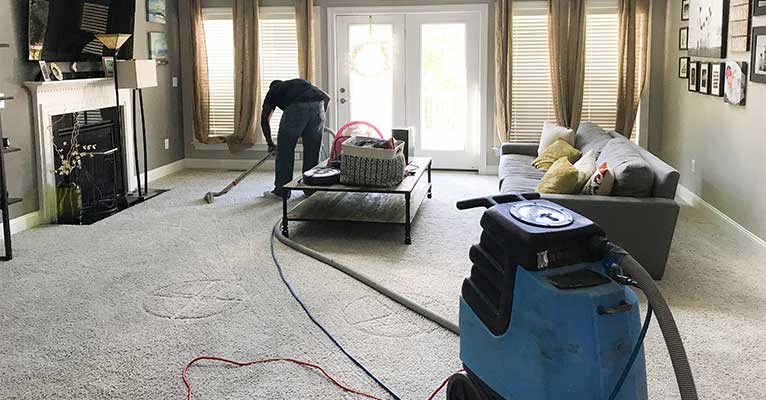
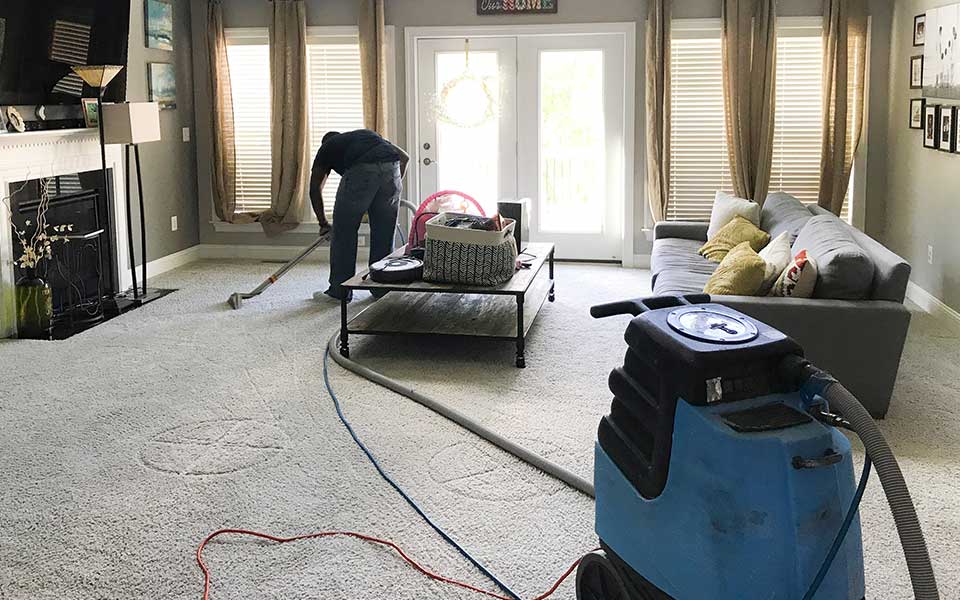
Our technician assessing pet urine odor removal from a couch considers the entire affected area. The visible stain provides useful information, but it cannot reveal the full depth of contamination on its own.
The overnight baking soda remedy has a reasonable appeal. Sodium bicarbonate can help with certain surface odors, and loose powder may reduce the perception of an unpleasant smell. The problem begins when homeowners expect it to remove urine residue embedded inside upholstered furniture.
The Baking Soda Overnight Fix myth rests on three assumptions that deserve a closer look.
Baking soda still has a limited role in household odor control, but persistent urine odor calls for a treatment suited to the affected material. Enzyme-based products target specific organic substrates, and the appropriate formulation depends on the type of contamination.
An enzyme-based cleaner works differently from a deodorizer. Enzymes are biological catalysts. They accelerate specific chemical reactions, and each enzyme acts on particular substrates.
The important detail is that not all enzymes act on the same materials. Proteases break down proteins into smaller components. Other enzymes target different substrates, depending on the product formulation. Some bio-enzymatic products also contain microorganisms that produce enzymes during treatment.
Enzyme products can be useful tools, but they are not magic sprays. The right treatment depends on what is soiled and how deeply the liquid has penetrated.
An effective treatment needs to match the contamination it is intended to address. The product must also be compatible with the upholstery fabric and cushion construction. Delicate upholstery, unstable dyes, certain backings, and previously treated areas all require care.
Follow the product label for application, contact time, and removal instructions. Applying a treatment too lightly, removing it too soon, or allowing it to dry before it has had the required contact time can undermine its performance.
Avoid saturating a sofa with a household cleaner in an attempt to reach deeper contamination. Excess liquid can travel farther into the cushion and prolong drying.
The goal is to address the contamination with a compatible treatment and remove the resulting residue appropriately.
Professional upholstery cleaning for pet odors involves more than spraying a product over a visible stain. Our technician assesses the fabric and estimates how far the contamination may have traveled before selecting a treatment.
The process typically involves several decisions:
The exact process varies by fabric and cushion construction. Delicate upholstery may need a low-moisture method, and some materials are unsuitable for aggressive heat or excessive water. Professional cleaning should account for those limitations.
| Method | What It Can Do | Main Limitation |
|---|---|---|
| Baking soda | May reduce certain surface odors | Cannot digest organic residue or reliably reach cushion foam |
| Enzyme-based treatment | Targets specific organic substrates | Results depend on the formulation, contact conditions, and contamination |
| Professional upholstery cleaning | Combines inspection, targeted treatment, and appropriate soil removal | Deep contamination may require further treatment or replacement of affected filling |
The comparison explains why a single home remedy may not resolve a recurring odor.

A Baltimore homeowner contacted us about a lingering odor in a light-gray microfiber sofa. The dog had an accident on one seat cushion several days earlier. The homeowner blotted the liquid, sprinkled baking soda over the spot, and vacuumed the powder the following morning.
For a short time, the sofa seemed fine. Several days later, the odor returned. The homeowner had also sprayed a fragranced upholstery product over the cushion, which made it harder to identify the original smell.
During an inspection, our technician noticed that the affected area extends toward a cushion seam. The visible mark is faint, but the odor is more noticeable near the seam and the lower portion of the cushion.

How pet urine can penetrate upholstery layers and leave residue inside cushion foam.
The inspection findings suggested that the urine may have penetrated beyond the microfiber surface and reached the foam inside the cushion. The baking soda may have reduced some surface odor, and the fragranced spray may have masked what remained.
After checking the fabric and identifying an appropriate cleaning method, the technician discussed a targeted treatment and the need to remove loosened residue. The homeowner was also advised that deeply contaminated foam may require further attention if the odor persists after cleaning and drying. Pet urine is one of several difficult upholstery stains; other stubborn stains may require a different cleaning approach.
Several details can change the expected outcome.
Baltimore homes present a range of upholstery cleaning situations. In a rowhome, a sofa may sit close to a wall, leaving limited room for airflow around the back and underside. Apartment residents may have little space to move furniture or dry detached cushions. Families with pets may also face recurring accidents in a favorite sleeping area.
Baltimore Carpet & Upholstery provides upholstery cleaning and pet stain removal services for homeowners dealing with stained fabric and persistent household odors.
If your sofa still smells after repeated home treatments, contact us at 410-505-8079 to discuss the affected fabric and available cleaning options. Our team can assess your sofa's cleaning needs and provide a price estimate based on the fabric and affected area.
Replacement may be worth considering if urine has deeply contaminated the foam and appropriate cleaning has not resolved the odor. An assessment can help determine whether further treatment is practical.
Previous cleaners may leave residues or affect the performance of a subsequent product. Tell your upholstery cleaning technician which products you have already used.
Yes. Use a clean, absorbent cloth to blot fresh urine gently. Avoid scrubbing, which can spread the liquid and work it deeper into the fabric. Follow the upholstery care instructions before applying a cleaning product.
It may help, depending on the formulation and how deeply the urine has penetrated. Older contamination can be harder to treat.