Get in touch: 410-505-8079
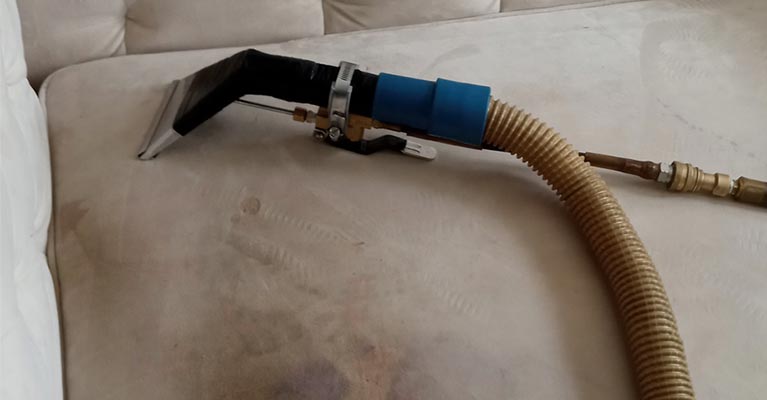

A dark mark remains on your sofa after cleaning. Is there still residue trapped in the fabric, or has the material itself changed? The answer determines what can happen next.
At Baltimore Carpet & Upholstery, our technicians encounter both situations. A food spill may leave residue that responds to appropriate cleaning. A similar-looking mark may come from dye loss, friction, or an earlier cleaning attempt. The two problems can look nearly identical, yet they have different prospects for improvement.
The stain's composition and history help determine the next step. Understanding these differences can save homeowners from repeated spot treatments that leave a larger mark than the original spill.

Three factors guide the assessment: stain chemistry, fabric construction, and previous cleaning attempts.
The stain's composition affects how it responds to cleaning. The fabric's properties determine which methods are suitable. Previous cleaning attempts can complicate stain removal by leaving residue or damaging the fabric.
It helps to distinguish three outcomes:
Professional upholstery cleaning can improve many stains, but the result depends on the condition of the material and the nature of the problem.
 Ask for Special Seasonal Offers
Before applying a stain remover, locate the furniture's care tag. Manufacturers commonly place it beneath a seat cushion or on the underside of the furniture. The code identifies the permitted cleaning category.
| Code | What It Permits | Important Consideration |
|---|---|---|
| W | Water-based upholstery cleaners | Avoid excessive moisture and follow the manufacturer's instructions. |
| S | Compatible water-free cleaning solvents | Water-based products are not permitted under this code. |
| WS | Water-based or solvent-based cleaning agents | The suitable choice depends on the fabric and stain. |
| X | Vacuuming or light brushing | Liquid cleaning agents are not permitted under this code. |
The code describes the boundaries for cleaning, not the likely result. Our technician will assess the stain and the upholstery condition before selecting a treatment.
Fresh beverage spills can leave colored residue on seat cushions and armrests. Prompt attention may improve the prospects for removal. Older drink stains can be more complicated. A mark may remain after the original liquid has been removed, particularly if the fabric has changed color or an earlier treatment spread the residue.
Wine and coffee stains can call for different treatment approaches. Read How Our Technicians Choose the Right Approach for Wine and Coffee Stains to learn more about the factors that guide stain treatment.
Food stains can contain several different substances. A sauce may leave pigment and oily residue on the same patch of upholstery. Removing one component does not guarantee removal of the other.
A homeowner reached out to our team after an accidental spill of soy-based dumpling sauce on their microfiber sofa. They had already tried water, dish soap, rubbing alcohol, and baking soda with no success. This call reflects a challenge our technicians see all the time: combining random household cleaners rarely solves the problem if the method does not address both the oily base and the dark pigment in the fabric.
During a recent job in Baltimore, our technicians treated a sectional whose seat cushions had turned noticeably darker than the back cushions. The household vacuumed regularly, but body oils, crumbs, pet hair, and everyday soil had accumulated in the fabric.
This is a useful distinction for homeowners. The problem was not a single spill; the seating surfaces had collected residue from repeated use. If you would like to see how professional upholstery cleaning can improve the appearance of furniture, visit Upholstery Cleaning Before and After: Real Results From Baltimore Jobs.
Pet accidents can leave yellowish marks and lingering odors. Liquid may penetrate beyond the fabric surface and reach the cushion filling. As we explain in our article on why baking soda may fail to remove pet odors from upholstery, surface treatments cannot reliably remove residue trapped in cushion foam. Enzyme-based cleaning may be appropriate, depending on the fabric and the contamination.
One customer called us because their sectional retained a pet odor after several attempts to clean the visible surface. During the assessment, our technician identified areas where pet-related residue had reached deeper into the upholstery.
The affected sections received targeted treatment, and additional odor treatment was discussed with the customer.
A mark that appears after spot cleaning may have a different cause than the original spill.
A customer contacted us after noticing water marks on a sofa following several attempts to clean the upholstery themselves. We explained that these marks can develop when soil moves toward the fabric surface during drying or when previous cleaning attempts alter the fabric's appearance.

Water rings do not automatically indicate permanent damage. The right cleaning method may improve their appearance.
Some stains leave residue that can be removed. Other problems involve changes to the fabric itself.

Online cleaning advice can be tempting, particularly after a spill on a frequently used sofa. Yet a product that works on one fabric may be unsuitable for another.
Before attempting stain removal, follow these precautions:
The safest approach begins with the manufacturer's instructions. A cleaner's label may describe a product as suitable for upholstery, but that does not establish compatibility with every fabric.
Professional advice can be useful before a stain becomes harder to treat. Consider contacting a specialist if:
Early assessment can help prevent additional damage caused by unsuitable cleaning products. It can also establish realistic expectations before further treatment begins.
A stubborn sofa stain does not always signal permanent damage. In some cases, residue remains in the fabric; in others, the visible mark reflects a change that cleaning cannot reverse.
Baltimore Carpet & Upholstery provides upholstery cleaning for sofas, sectionals, chairs, and other upholstered furniture across Baltimore. Contact our team at 410-505-8079 or fill out the online form for a free estimate and an assessment of your furniture's condition. We can help you understand the available cleaning options and set realistic expectations for the results.
An X code permits vacuuming or light brushing only. Water-based and solvent-based cleaning agents are not permitted under this code.
Our technicians inspect the fabric, assess the stain, and select a cleaning method suited to the upholstery's condition. Heavily soiled areas may receive targeted pre-treatment before cleaning. Afterward, we review the results and provide drying recommendations.
Our upholstery cleaning practices follow the ANSI/IICRC S300 Standard for Professional Upholstery Cleaning.
Professional cleaning may improve stains and accumulated soil on used sofas and chairs. However, previous treatments, unknown spills, and existing fabric damage can affect the results.
Professional cleaning can improve the appearance of used furniture before a sale or donation. It may reduce visible soil and some odors, although permanent discoloration and wear can remain.