Get in touch: 410-505-8079
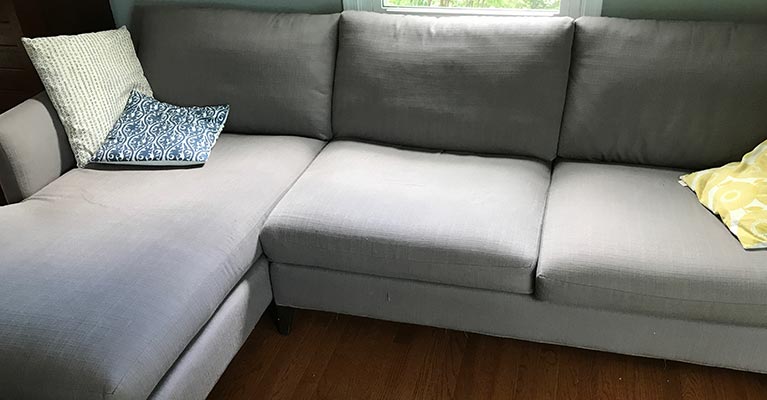

Furniture can hide years of daily use in small details: a darkened armrest, a seat cushion that looks dull next to the back cushion, or crumbs lodged deep along a seam.
We recently cleaned a Baltimore sectional whose seat cushions had become noticeably darker than the back cushions. The family vacuumed regularly, yet body oils, crumbs, pet hair, and everyday soil had settled into the fabric. The contrast between the seat cushions and back cushions made the wear easy to see.
Office furniture develops its own wear patterns. Chair backs can stay fairly clean, but seats, armrests, and front edges tend to show more discoloration from daily contact.
At Baltimore Carpet & Upholstery, we clean sofas, sectionals, chairs, and other upholstered furniture in Baltimore homes, apartments, offices, and shared spaces.
Our technicians clean many upholstery materials found in Baltimore homes and businesses.
Common fabrics include:
Microfiber can show darker high-use areas around seat cushions, and it needs careful treatment because unsuitable cleaning can leave visible appearance changes.
Some delicate fabrics call for lower-moisture care and extra attention during treatment and drying.
Furniture collects more than surface dust. Daily contact leaves marks in seams, cushions, armrests, headrests, and other heavily used areas.
Pet odors can settle into cushions and fabric surfaces.
One Baltimore customer called us about a sectional with a persistent pet odor. The homeowner had cleaned the visible surface several times, yet the smell remained. During our evaluation, we found several areas where pet-related residue had reached deeper into the upholstery.
The affected sections received targeted treatment as part of the cleaning service, and the technician discussed extra odor treatment with the customer.
Surface cleaning can improve the top layer of fabric, but residue deeper inside a cushion can require more attention.
Coffee, sauces, juice, and food residue can leave visible marks on furniture.
We recently cleaned a Baltimore dining chair with an old drink stain near the front edge of the seat. The stained section received targeted pre-treatment, followed by cleaning of the full chair.
A localized stain can need concentrated work even when the rest of the chair carries only light soil.
Armrests, seat cushions, and headrest areas tend to show daily-use soil first.
Body oils and ground-in dirt can be collected in these high-contact areas. Uneven discoloration becomes easier to notice when a heavily used arm or cushion is compared with a less-used section of the same furniture.
Dust, crumbs, and pet hair can settle into seams, cushion edges, and upholstery fibers.
Regular vacuuming helps with surface debris, but material can remain around seams and tight areas that are hard to reach. Those spots need closer attention during professional cleaning.
Furniture used every day usually shows wear in specific areas first.
Sectionals, office furniture, waiting-room seating, and shared-use couches can collect soil faster because the same surfaces receive constant contact.
Uneven wear is a useful clue. If the arms and seat fronts look much darker than the backs or sides, those high-use zones are carrying heavier soil.
Our upholstery cleaning process covers inspection, preparation, cleaning, a final check, and drying guidance. Professional upholstery cleaning methods and procedures are covered by the ANSI/IICRC S300 Standard for Professional Upholstery Cleaning.
Every appointment starts with a close look at the furniture.
We check:
This step helps the technician spot concerns that could affect cleaning, including worn fabric, heavy staining, delicate materials, or unusual cushion construction.
 Ask for Special Seasonal Offers


Preparation follows the condition of the furniture. Loose surface debris can be removed as needed, and stained or heavily used sections can receive targeted pre-treatment.
A greasy headrest, stained armrest, and lightly used back cushion may need separate levels of preparation. Treating the problem areas first helps the main cleaning work more efficiently.
Our technicians use hot water extraction or lower-moisture cleaning based on the upholstery material, construction, and condition. Cleaning products are chosen for the fabric and the type of soil present.
After cleaning, the technician checks the upholstery and reviews drying expectations with the customer.
Cushion thickness, fabric, humidity, airflow, and cleaning method can affect drying time. Customers receive practical guidance on when the furniture should be ready for regular use again.
Some upholstery fabrics respond well to hot water extraction. Other materials call for low-moisture cleaning.
Two pieces in the same room can call for separate approaches. A standard sofa may be suitable for extraction cleaning, whereas an older or moisture-sensitive accent chair may need a lower-moisture process.
| Cleaning Method | Common Fit | Why It May Be Used |
|---|---|---|
| Hot water extraction | Compatible upholstery with soil that responds well to extraction cleaning | Can provide deeper rinsing when the fabric and construction support the process |
| Lower-moisture cleaning | Delicate, older, or moisture-sensitive upholstery | Uses less moisture where the fabric or construction calls for greater caution |
Using one fixed cleaning process on every piece can create avoidable problems. Fabric, construction, and soil level all play a part in the choice.
We provide upholstery cleaning across Baltimore and nearby communities for residential and commercial properties.
Our team cleans furniture in:
Residential and commercial furniture develops its own patterns of use. A family sofa may collect pet hair, food residue, and everyday soil. Waiting room or office seating can show concentrated wear on seats, armrests, and other high-contact areas.
Upholstery cleaning prices can vary quite a bit between furniture pieces.
A small accent chair with light discoloration can take far less work than a large sectional with several cushions, pet residue, food stains, body oils, and heavy soil.
Several things can affect upholstery cleaning pricing, including:
A heavily soiled sectional with several cushions can take far more cleaning time and labor than two lightly stained dining chairs. Piece count alone does not show the full scope of the job. Size, fabric, condition, staining, and labor all influence the price.
Contact us at 410-505-8079 or fill out an online form for a free estimate and appointment availability.
Customers contact our team for:
Some customers call after a spill. Others reach out because a sofa, sectional, or office chair has gradually collected years of everyday use. In many cases, there is no single stain causing concern. The furniture has simply become duller, darker in high-use areas, or harder to freshen with routine vacuuming.
We provide upholstery cleaning services across Baltimore neighborhoods, including:
We clean furniture in rowhomes, apartments, offices, waiting rooms, and shared community spaces across these areas.
Upholstery is one part of the residential and commercial cleaning work we provide across Baltimore.
Our carpet cleaning service removes dirt, stains, and odors trapped deep inside carpet fibers.
We clean many common rug materials, including synthetic rugs, wool-blend rugs, and residential area rugs.
Many homes schedule upholstery cleaning every 12-24 months. Homes with pets, children, or heavy daily use may need cleaning more frequently.
Yes. Professional upholstery cleaning can reduce many common odors trapped in fabric and cushions. Strong or long-term odor problems can require extra treatment based on how deeply the residue has reached.
Yes. We clean sectionals, large sofas, recliners, dining chairs, and many other oversized upholstered furniture pieces. Large sectionals can have separate cushions, deep seams, and several high-use areas, which can increase the cleaning time.
Yes. Remove blankets, toys, pillows, and personal belongings from the furniture ahead of the appointment. Clearing these items gives the technician better access to the upholstery and helps the visit move more efficiently.
Drying time varies by fabric, cushion thickness, airflow, humidity, and cleaning method. Many upholstered pieces dry within several hours, though thicker cushions or moisture-sensitive materials can take longer.
We can treat many common upholstery stains, including food, drink, body oil, and everyday soil. Results vary based on the type of stain, how long it has been present, the fabric, and any previous cleaning attempts.
For upholstery cleaning in Baltimore, call us at 410-505-8079 to ask about pricing and the soonest available appointment.